
How Boom Length Affects Crane Load Capacity
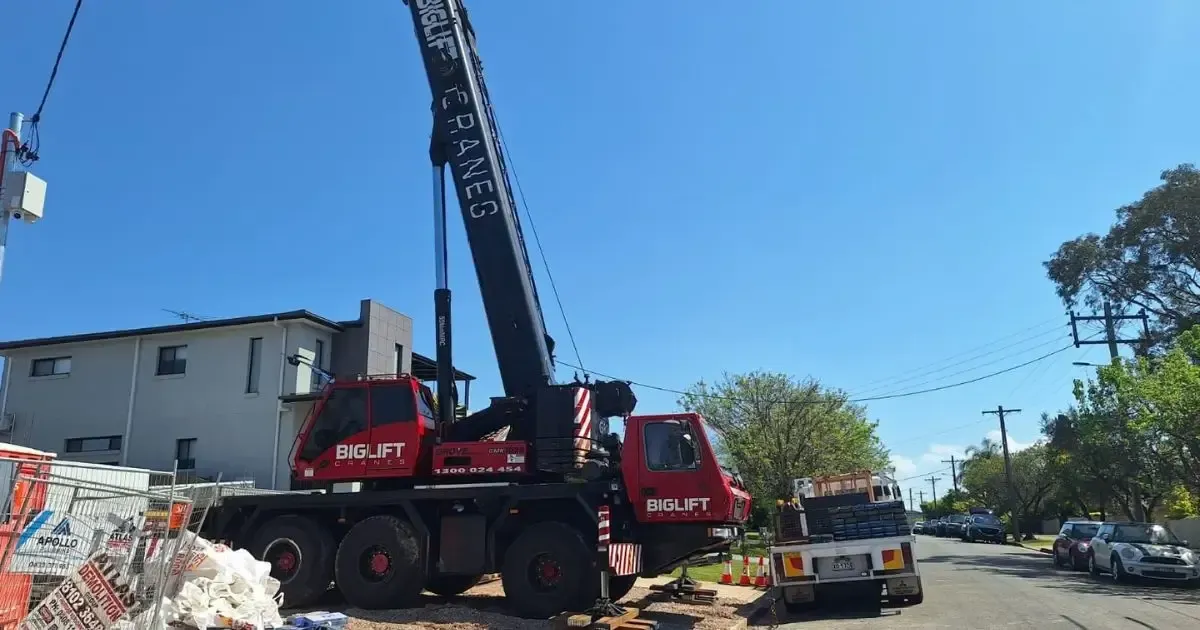
Boom length affects how far and how high a crane can reach, but boom length alone does not determine lifting capacity. The crane's available rated capacity depends on factors such as working radius, boom configuration, counterweight, outriggers and site conditions.
In general, a crane's rated capacity decreases as the working radius increases. This means a crane's maximum advertised capacity cannot be used to determine how much it can safely lift at every position on a construction site.
Understanding the relationship between boom length, working radius and crane configuration helps contractors, builders and site managers select a crane that suits the actual lift.
Key Takeaways
- Boom length and working radius are different. A 30 m boom does not automatically provide a 30 m horizontal working radius.
- Working radius is a major factor in crane capacity. As the load moves farther from the crane's centre, the available rated capacity generally decreases.
- A longer boom does not automatically mean lower capacity. Its effect depends on the boom angle and the crane's configuration.
- The load chart determines the applicable rated capacity. The correct chart must match the specific crane and configuration.
- Site conditions matter. Ground stability, setup space, obstacles, lifting height and the load path can affect crane selection.
- Maximum crane tonnage is not capacity at every radius. A crane's available capacity can be lower when the load is positioned farther away.
What Is the Difference Between Boom Length and Working Radius?
Boom length is the length of the crane's boom, while working radius is the horizontal distance from the crane's applicable reference point to the load.
These measurements are related but are not interchangeable.
For example, a crane with a 30 m boom does not necessarily have a 30 m working radius. The boom angle and crane geometry affect where the load can be positioned.
| Term | Definition | Why it matters |
|---|---|---|
| Boom length | Length of the crane's boom in its applicable configuration | Affects available reach and configuration |
| Boom angle | Angle of the boom relative to horizontal | Affects horizontal and vertical reach |
| Working radius | Horizontal distance from the crane's applicable reference point to the load | A major factor in determining rated capacity |
| Rated capacity | Maximum gross load permitted for a particular working configuration | Must be checked against the applicable load chart |
This distinction is important because a crane's capacity is not determined by boom length alone.
How Does Boom Angle Affect Working Radius?
Changing the boom angle changes the horizontal position that the boom can reach.
Consider a simplified 30 m boom:
- At 80°: 30 × cos(80°) ≈ 5.2 m
- At 45°: 30 × cos(45°) ≈
21.2 m
The boom remains 30 m long, but its horizontal projection changes significantly as the angle changes.
These figures illustrate the geometry only. They are not a crane capacity calculation. Actual working radius and rated capacity must be determined using the crane's specifications and applicable load chart.
The practical relationship is:
Boom length and boom angle affect reach, while working radius is used with the crane's configuration to determine the applicable rated capacity.
Why Does Crane Capacity Decrease as Working Radius Increases?
A greater working radius increases the turning effect created by a suspended load, so the crane's available rated capacity generally decreases as the load moves farther away.
A simplified way to illustrate this relationship is:
Load moment = Load weight × Load radius
For example:
- 10-tonne load × 10 m radius = 100 tonne-metres
- 10-tonne load × 20 m radius = 200 tonne-metres
The second example produces twice the simple load-moment value because the radius has doubled.
This formula helps explain the principle, but it is not a standalone crane capacity calculation. The actual rated capacity must be taken from the manufacturer's load chart for the specific crane and configuration.
What Factors Determine a Crane's Lifting Capacity?
A crane's available lifting capacity depends on the load, working radius, crane configuration and operating conditions rather than maximum tonnage alone.
Load weight
The actual weight of the load is the starting point.
Use an accurate weight where possible rather than relying on an estimate. The suspended load can also include applicable lifting equipment and other components that need to be accounted for under the manufacturer's instructions.
Working radius
The required radius is one of the most important measurements when selecting a crane.
The crane's position, load pick-up point and final placement point all need to be considered when establishing the required radius.
Crane configuration
The applicable capacity can vary according to how the crane is configured.
Depending on the crane, relevant factors may include:
- Boom length
- Boom angle
- Counterweight
- Outrigger configuration
- Jib or boom extensions
- Attachments
- Operating position
SafeWork NSW requires operators to consider the crane configuration, lifting task and site constraints when applying the load chart.
Required lifting height
A lift may require additional reach to clear a building, structure or other obstacle.
The crane therefore needs to satisfy both the required horizontal reach and vertical lifting height while maintaining the required rated capacity.
Ground and setup conditions
The crane also needs a suitable position from which to operate.
Planning may need to consider:
- Ground stability
- Slopes
- Excavations
- Underground services
- Suspended slabs
- Outrigger support
- Available setup space
- Overhead hazards
These site conditions can affect where the crane can be positioned and how the lifting operation is planned. SafeWork NSW provides additional mobile crane safety guidance covering issues such as crane positioning, ground conditions, overhead hazards and underground services.
Wind and environmental conditions
Wind can affect crane operation and load control, particularly when lifting large or awkwardly shaped loads.
The manufacturer's operating requirements and the site's lift-planning controls should be followed rather than relying on a generic wind allowance.
How Do You Read a Crane Load Chart?
The load chart for the exact crane and configuration should be used to determine the rated capacity at the required radius.
SafeWork NSW explains that mobile crane operators need to understand the crane's limits and how to
read the mobile crane load charts for each relevant configuration.
A practical process is:
Step 1 Identify the crane
Confirm the exact make and model.
A description such as "50-tonne mobile crane" is not sufficient because different crane models can have different load charts.
Step 2 Confirm the configuration
Identify the applicable:
- Boom length
- Boom angle
- Counterweight
- Outrigger configuration
- Jib or extension
- Operating position
Step 3 Determine the working radius
Establish the required radius based on the crane's planned position, the load pick-up point and the final placement point.
Step 4 Determine the required height
Confirm how high the load needs to be lifted and whether it must clear buildings, structures or other obstacles.
Step 5 Check the applicable load chart
Use the load chart for the exact crane and configuration to determine the rated capacity at the required radius.
Step 6 Check manufacturer requirements
Review applicable deductions, limitations and configuration requirements in the crane's operating documentation.
SafeWork NSW notes that rated capacity depends on the crane's relevant configuration and that operators need to understand and apply the crane's load chart correctly.
Why Can't a Crane Lift Its Maximum Capacity at Every Radius?
A crane's maximum rated capacity does not mean it can lift that amount at every working radius or configuration.
The maximum rating applies to particular operating conditions. When the load is positioned farther away or the crane is configured differently, the applicable rated capacity can be substantially lower.
For this reason, the useful question is not:
"How many tonnes is the crane?"
It is:
"How much can this specific crane lift at the required radius, height and configuration?"
The applicable load chart provides the answer.
When Do You Need More Boom?
More boom may be required when a lift needs additional horizontal reach or vertical height while maintaining the required capacity.
Common examples include:
Rooftop equipment
Air-conditioning units, mechanical equipment and other plant may need to be lifted above a building and positioned on a rooftop.
The crane needs sufficient height and reach to clear the structure and place the load.
Lifting over buildings
A crane may need to operate away from the final landing point because there is insufficient space to establish it directly beside the building.
This can increase the required working radius.
Restricted-access sites
Buildings, trees, roads and other obstacles can limit where the crane can be positioned.
The required reach may therefore be greater even when the load itself is relatively light. The type of crane selected will also depend on the available access, required reach and site conditions.
For a closer look at the options available for different lifting requirements, see our guide to types of cranes available for hire in Sydney.
Structural and precast lifts
Precast panels, structural steel and other components may need to be lifted from one location and installed at another.
The appropriate crane depends on the load weight, working radius, required height and site conditions.
Common Misconceptions About Boom Length and Crane Capacity
A longer boom always means less capacity
Not necessarily.
A longer boom can provide greater reach, but its effect on available capacity depends on the working radius, boom angle and crane configuration.
A 30 m boom provides 30 m of horizontal reach
No.
Boom length and working radius are different measurements. Boom angle affects the horizontal position of the load.
A 50-tonne crane can lift 50 tonnes anywhere on site
No.
The applicable rated capacity depends on the crane's configuration and working conditions.
Load weight is enough to choose a crane
No.
The required radius, height, configuration and site conditions also need to be assessed.
The load chart is only relevant to the crane operator
No.
The load chart is central to determining the crane's rated capacity for the applicable configuration.
What Information Does a Crane Hire Company Need?
Accurate project information helps determine which crane and configuration are suitable for the lift.
Provide:
| Information | Why it is needed |
|---|---|
| Load weight | Establishes the required lifting capacity |
| Load dimensions | Helps assess clearance and load characteristics |
| Pick-up location | Establishes the starting point of the lift |
| Final placement location | Determines where the load needs to reach |
| Required lifting height | Establishes vertical reach requirements |
| Working radius | Helps determine the applicable rated capacity |
| Site access | Determines which crane can reach the site |
| Ground conditions | Helps assess crane setup requirements |
| Obstacles | May affect crane position and load path |
| Overhead powerlines | Creates additional planning requirements |
| Available setup space | Determines whether the crane can be positioned correctly |
Site photos, plans, measurements and accurate load information can also help a crane hire company assess the job before mobilisation.
If you're comparing crane hire options, our guide on what to look for when hiring a mobile crane covers additional considerations such as load requirements, access, site conditions and crane selection.
Common Crane Selection Mistakes
Choosing a crane based only on load weight
A load may be within a crane's maximum capacity but exceed its rated capacity at the required radius.
Treating boom length as horizontal reach
The physical length of the boom does not equal the horizontal working radius.
Ignoring crane configuration
Changing the boom, counterweight, outriggers or attachments can affect the applicable load-chart rating.
Failing to assess the setup location
The crane needs suitable ground and enough space to operate within the manufacturer's requirements.
Using a generic capacity allowance
A generic percentage should not replace the manufacturer's load chart or site-specific lift planning.
Frequently Asked Questions
Does a longer boom reduce crane capacity?
Not by itself. A longer boom can change the crane's operating configuration and provide greater reach, but available capacity depends on working radius and other configuration factors.
What mainly causes crane capacity to decrease as the load moves farther away?
Working radius. As the radius increases, the load creates a greater turning effect, so the crane's rated capacity generally decreases.
Is boom length the same as working radius?
No. Boom length is the physical length of the boom. Working radius is the horizontal distance from the crane's applicable reference point to the load.
How do I know how much a crane can lift at a specific radius?
Check the manufacturer's load chart for the exact crane and configuration. The applicable chart provides the rated capacity for the relevant working conditions.
Can I select a crane using only the load weight?
No. Working radius, lifting height, crane configuration and site conditions also need to be considered.
Why can two cranes with the same maximum capacity have different capabilities?
Their load charts and configurations can differ. Boom setup, counterweight, outriggers, attachments and other specifications can affect their rated capacity.
What information should I provide when requesting crane hire?
Provide the load weight and dimensions, pick-up and landing locations, required height and radius, site access, obstacles, ground conditions and available setup space.
Conclusion
Boom length is only one part of crane selection. The crane must have sufficient rated capacity for the required load, working radius, height and configuration under the actual site conditions.
Start by defining the lift requirements, then determine the required radius and height and verify the crane's rated capacity using the manufacturer's load chart.
For mobile crane hire in Sydney, BIGLIFT CRANES provides mobile crane hire for different lifting requirements and can help assess factors such as load weight, required reach, access and site conditions when planning a lift.