
How Cranes Are Used for Swimming Pool Installation
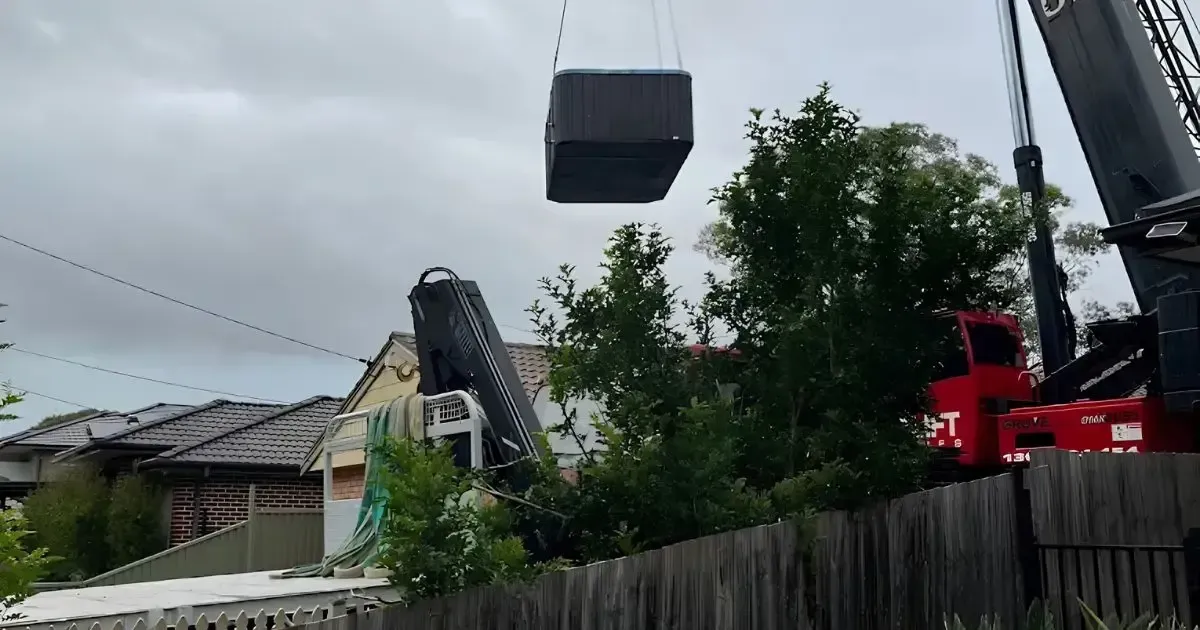
A crane can lift a swimming pool shell into a backyard when normal ground access is restricted or impractical. This is particularly useful when a house, fence, narrow side access, steep change in level or another obstruction prevents the pool from being moved into position from the ground.
The crane is only one part of the planning process. The pool's weight and dimensions, lifting radius, required height, crane position, ground conditions and surrounding obstacles all affect whether a particular lift is suitable.
For homeowners and pool builders, understanding these factors can make it easier to plan the installation and provide the right information when
requesting crane hire.
Key Takeaways
- A crane can place a swimming pool in a backyard where normal ground access is restricted, including some properties where the pool needs to be lifted over a house or other obstacle.
- Pool weight alone does not determine the required crane. Lift radius, height, crane position, configuration and site conditions also affect crane selection.
- Lifting radius is important because crane capacity changes with the operating configuration.
- There is no single crane type for every pool installation. City, Franna, All-Terrain and other mobile cranes may be considered depending on the project.
- Over-house pool lifts are site-specific. The crane, load, lifting path, ground conditions and surrounding structures need to be assessed before the lift.
- Good information makes quoting easier. Pool weight and dimensions, site address, access details, lifting distance and clear site photographs are useful starting points.
- Pool crane lifting requires proper planning and competent personnel. Ground conditions, powerlines, structures, suspended loads and other hazards need to be considered.
When Do You Need a Crane for Swimming Pool Installation?
A crane may be needed when a pool cannot be moved practically from its delivery point to the prepared installation area using normal ground access.
This is common on established Sydney properties where a house or other structures sit between the street and backyard. A backyard may be accessible to people but not to the equipment needed to move a large pool shell.
Common situations include:
- A house sits between the street and backyard
- Side access is too narrow for the pool shell
- Fences or boundary walls block ground-level access
- The backyard is significantly higher or lower than the access point
- Trees or existing structures restrict the available path
- The pool needs to be lowered directly into a prepared excavation
In these situations, a crane may allow the pool to travel above an obstruction rather than through it.
For example, if a fibreglass pool arrives by truck but cannot fit down the side of the property, a
mobile crane may be positioned in a suitable location and used to lift the shell toward its installation point.
Whether this is practical depends on the individual property and lifting requirements.
What Determines Whether a Crane Can Lift Your Pool?
The appropriate crane is determined by the complete lifting requirement, not simply by the weight of the pool.
NSW guidance recommends considering factors such as site access, ground conditions, rated lifting capacity, crane position, overhead and underground services, boom configuration and environmental conditions when planning crane operations.
For a swimming pool installation, the main considerations include:
| Factor | Why it matters |
|---|---|
| Pool weight | Establishes the weight of the suspended load |
| Pool dimensions | Affect handling and lifting arrangements |
| Lift radius | Influences the crane's available lifting capacity |
| Lift height | Affects required reach and configuration |
| Crane position | Determines the working radius and lifting path |
| Site access | Limits where equipment can be positioned |
| Ground conditions | Affect crane setup and stability |
| Buildings and obstacles | Can restrict the lifting path |
| Powerlines and services | Need to be identified during planning |
Pool weight is only one part of crane selection. The complete lift needs to be assessed against the crane's specifications and operating configuration.
At BIGLIFT CRANES, we consider the load and site requirements together when determining a suitable crane for the job.
Why Does Lifting Radius Matter for a Pool Lift?
Lifting radius is the horizontal distance from the crane's centre of rotation to the load, and it is an important factor in determining the crane's available lifting capacity.
A crane does not have the same rated capacity at every radius. The applicable capacity depends on the crane's configuration and operating conditions. NSW guidance defines rated capacity in relation to a particular crane configuration, with load charts showing the maximum load for a specific radius and configuration.
For example, two swimming pools could have the same weight but require different crane arrangements. One might be placed relatively close to the crane, while another may need to travel over a house and reach a backyard farther away.
The second lift can create a greater working radius and may therefore require a different crane configuration or greater capacity.
Common misconception
A crane's advertised tonne rating does not mean it can lift that maximum weight at every distance.
The actual lifting requirements need to be checked against the appropriate crane specifications and load chart for the planned configuration.
This is why crane position should be considered before selecting equipment rather than choosing a crane based only on pool weight.
What Type of Crane Is Used for Pool Installation?
There is no single crane type that suits every swimming pool installation. The appropriate equipment depends on the pool, required radius and height, site access, available setup space, ground conditions and other project requirements.
Depending on the job, the equipment considered may include:
| Crane type | Potential application | Important consideration |
|---|---|---|
| City crane | Restricted residential sites and confined setup areas | Available setup space and lifting requirements |
| All-Terrain crane | Projects requiring different capacity, reach or site capability | Access, ground conditions and configuration |
| Franna crane | Pick-and-carry applications | Travel conditions and manufacturer requirements |
| Other mobile cranes | Project-specific lifting requirements | Load, radius, height and site conditions |
A
city crane can be useful where available setup space is limited. BIGLIFT uses city cranes for confined and built-up environments, including residential pool and spa placement.
However, restricted access alone does not automatically mean a city crane is suitable. A longer lifting radius, greater height or heavier load may require another crane configuration.
The crane should therefore be selected after the lifting requirements and site conditions have been assessed.
Can a Crane Lift a Swimming Pool Over a House?
Yes, some swimming pools can be lifted over a house when the crane, load and site conditions allow the lift to be properly planned.
An over-house lift can provide an alternative when there is no suitable path around the building. Instead of moving the pool through narrow side access, the crane lifts the shell above the obstruction and toward the prepared installation area.
The assessment may need to consider:
- Pool weight and dimensions
- Distance from the crane to the installation area
- Required lift height
- Boom configuration
- Crane setup location
- Trees and other structures
- Overhead services
- Ground conditions
- Clearance along the lifting path
The important question is not simply whether a crane can reach over the house. It is whether the required load can be handled at the necessary radius and height from a suitable crane setup position.
That can only be determined from the actual pool and property details.
How Is a Swimming Pool Crane Lift Planned?
A pool crane lift is planned by matching the pool's load requirements with the physical conditions at the property before the lifting operation begins.
The main stages are:
1. Confirm the pool details
The manufacturer's supplied weight, dimensions and lifting information establish important details about the load.
2. Assess the property
The available access, potential crane position, installation area and surrounding structures are considered.
3. Determine the lifting requirements
The required radius, height and lifting path are assessed to establish the equipment requirements.
4. Select the crane and lifting arrangement
A suitable crane configuration and lifting arrangement can then be considered based on the complete lift.
5. Prepare the setup area
Ground conditions, available space and surrounding hazards need to be addressed before the crane operates.
6. Coordinate the installation
The crane operation needs to align with pool delivery and the installation team's work so the shell can be positioned at the prepared excavation.
The purpose of this process is to make sure the crane, load, lifting path and site conditions are considered together rather than separately.
What Information Should You Provide for a Pool Crane Quote?
Accurate pool specifications and clear site information give a crane company the details needed to assess the lifting requirements and prepare a more useful quote.
Useful information includes:
Pool details
- Pool type
- Manufacturer
- Manufacturer-confirmed weight
- Pool dimensions
- Available lifting information
Property details
- Site address
- Pool excavation location
- Possible crane setup area
- Street and driveway access
- Approximate distance between the crane and pool location
Site obstacles
Let the crane company know about anything that could affect the setup or lifting path, such as:
- Houses
- Garages
- Fences
- Trees
- Powerlines
- Other overhead structures
Clear photos of the street access, potential crane setup area, surrounding structures and pool installation area can also provide useful context.
You do not need to determine the crane size yourself.
The purpose of this information is to give the crane company enough detail to assess the lift and discuss suitable equipment.
How Do Site Access and Ground Conditions Affect a Pool Lift?
Site access and ground conditions affect where the crane can position itself and how the lifting operation can be carried out.
The crane needs more than a clear line to the backyard. It also needs a suitable operating area and access route.
Important considerations include:
Access and setup space. The crane needs a suitable route to its planned operating position and enough room for the required configuration.
Ground conditions. The supporting surface and underlying conditions need to be considered when planning the crane setup. NSW guidance states that cranes should be positioned on suitable ground and that ground conditions should be assessed before lifting.
Slopes. A sloping setup or travel area can introduce additional planning requirements, particularly for cranes carrying suspended loads.
Underground services. Services beneath the proposed setup area may need to be identified before positioning the crane or its supports.
Powerlines. Overhead electrical infrastructure can affect where and how crane operations are carried out.
Traffic and pedestrians. Some locations may require additional controls depending on where the crane and associated vehicles operate.
These factors help determine whether the proposed crane position and lifting arrangement are suitable.
How Is the Pool Shell Lifted and Positioned?
A pool shell is lifted using a lifting arrangement suited to its weight, dimensions, balance and designated lifting points or manufacturer requirements.
The exact arrangement depends on the pool.
NSW rigging guidance notes that load weight, shape, dimensions, balance, designated lifting points and environmental conditions can all affect sling selection and the method used to handle a load.
The pool manufacturer or supplier should provide relevant lifting information where required, including the confirmed weight and designated lifting points or instructions.
During the lift, the shell is controlled as it travels from its starting position to the prepared installation area. Once it reaches the excavation, it can be positioned so the pool installation team can continue its work.
Coordination between the crane crew, pool supplier and installer is important because the lifting operation needs to fit the installation sequence.
What Safety Factors Are Considered During a Pool Crane Lift?
Pool crane lifts require proper planning, competent personnel and suitable equipment because mobile crane operations can create risks to workers, property and people nearby.
SafeWork NSW identifies mobile crane risks including falling loads, crane contact with buildings or powerlines, and people being struck or crushed.
Depending on the project, planning may need to consider:
- Crane capacity for the planned configuration
- Ground and setup conditions
- Buildings and other structures
- Powerlines and overhead hazards
- People around the lifting area
- Weather and environmental conditions
- Appropriate lifting equipment
- Communication between workers involved in the lift
NSW guidance also identifies environmental conditions such as wind, storms and lightning as factors that can affect crane planning.
Safety should be considered as part of the lift planning process from the beginning, not as a final check on installation day.
How Much Does Pool Crane Hire Cost in Sydney?
Pool crane hire costs vary because each lift has different equipment, access, setup and time requirements.
Two properties can have the same pool but require different crane arrangements. A pool positioned at a short radius from an accessible setup area presents different requirements from the same pool being lifted over a house to a backyard farther away.
Factors that can affect the quote include:
| Cost factor | Why it can matter |
|---|---|
| Crane required | Different lifts require different equipment |
| Lift radius and height | Affect crane requirements |
| Hire duration | Longer jobs require more crane time |
| Site access | Can affect planning and setup |
| Setup requirements | Depend on site conditions |
| Traffic management | May be required in some locations |
| Project complexity | More involved lifts can require additional planning |
A project-specific quote is more useful than estimating the cost from pool weight alone.
Providing the pool specifications and clear site photos at the start can also help the crane company understand the job more clearly.
Common Misconceptions About Pool Crane Hire
Pool weight, crane size and property access are often treated as simple yes-or-no questions, but actual crane selection depends on the complete lifting operation.
A heavier pool automatically needs the biggest crane
Not necessarily. Pool weight is important, but lift radius, height, crane position, configuration and site conditions also affect crane selection.
A crane's tonne rating is its capacity for every lift
No. The applicable lifting capacity depends on the crane's configuration and operating conditions. The relevant load chart needs to be checked for the planned lift.
No side access means a pool cannot be installed
Not necessarily. A crane may provide an alternative route by lifting the pool over an obstruction, subject to the actual site and lifting requirements.
Any crane can lift a pool over a house
No. Over-house lifting is site-specific and depends on the pool, required height and radius, crane position, lifting path and surrounding hazards.
The largest crane is always the best option
Not necessarily. The equipment should match the actual lifting requirements and site conditions rather than simply being the largest available crane.
Frequently Asked Questions
Can a crane lift a swimming pool into a backyard?
Yes. A crane can lift a pool shell into many backyards where ground access is restricted. Suitability depends on the pool, required lift and site conditions.
Can a crane lift a pool over a house?
Yes, some pool installations involve lifting the shell over a house. The required radius, height, crane position, load and site conditions need to be assessed first.
What size crane do I need for a swimming pool?
There is no standard crane size for every pool. The required equipment depends on the load, working radius, lift height, crane configuration, access and setup conditions.
How far can a crane lift a swimming pool?
There is no single distance that applies to every crane. Reach and available lifting capacity depend on the crane model, configuration, load weight, working radius and operating conditions.
Can a crane install a pool if there is no side access?
Potentially, yes. A crane may provide an alternative when a pool cannot travel through the side of a property, provided the required lift is feasible.
Can you lift fibreglass and precast pools?
Cranes can be used to position different types of pool shells where suitable lifting information and arrangements are available. The pool's weight, dimensions and manufacturer requirements should be confirmed before planning the lift.
Can a crane lift a spa?
Yes, cranes can also be used for spa placement where conventional ground-level delivery is not practical. BIGLIFT provides city crane services for residential pool and spa placement.
How long does a pool crane lift take?
There is no standard duration. The time required depends on the site, crane setup, lifting requirements and coordination with the pool delivery and installation teams.
How much does it cost to crane a pool into a backyard?
The cost depends on the crane required, hire duration, lift radius, site access, setup requirements and project complexity. A project-specific quote is the most reliable way to determine the cost.
Planning a Pool Installation in Sydney?
If your pool needs to go over a house, fence or another access restriction, you do not need to determine the crane size yourself.
Send us the
pool weight and dimensions, site address, installation location and clear photos of the property and access area. We can review the lifting requirements and discuss a suitable crane hire option for the job.
BIGLIFT CRANES provides mobile crane hire across Sydney for residential and construction lifting projects, including pool and spa placement.
Get in touch with BIGLIFT CRANES to request a quote for your pool lift.