
Why Are Cranes Used on Construction Sites?
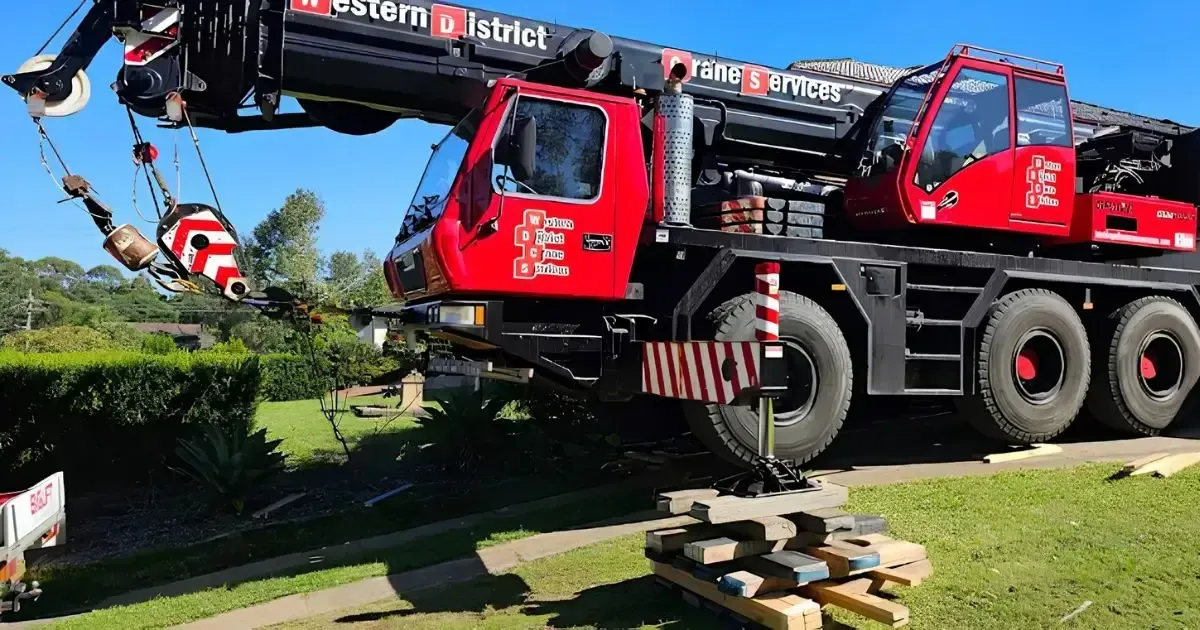
Cranes are used on construction sites to lift, move and position heavy or awkward loads that cannot be safely or practically handled with conventional equipment. They can place materials and equipment at height, across obstacles or in areas that are difficult to reach from ground level.
The right crane depends on the lifting task and the site. Load weight, working radius, lifting height, crane configuration, access, ground conditions and available setup space can all affect which crane is suitable.
Key Takeaways
- Cranes lift and position materials, structural components, machinery and equipment on construction sites.
- The required crane depends on the complete lifting task, not just the weight of the load.
- Working radius can affect the crane's rated lifting capacity.
- Site access, ground conditions, overhead hazards and setup space can influence which cranes are suitable.
- Mobile and tower cranes are designed for different project requirements.
- Safe crane operations require appropriate planning, equipment, personnel and work controls.
What Are Cranes Used for on Construction Sites?
Cranes are primarily used to lift and position materials, components, machinery and other heavy loads where ground-based equipment cannot provide the required reach, height or lifting capability.
Common construction applications include:
- Structural steel: Lifting beams, columns and other steel components into position.
- Precast concrete: Positioning precast panels, beams and other concrete elements.
- Building materials: Moving heavy materials to upper floors or difficult-to-access areas.
- Rooftop equipment: Lifting HVAC units and other mechanical equipment onto roofs.
- Machinery and equipment: Positioning generators, plant and other heavy equipment.
- Construction plant: Moving suitable equipment around a worksite where crane lifting is required.
- Pools and spas: Placing items over fences, buildings or other obstacles when ground access is restricted.
- Civil and infrastructure work: Positioning materials and equipment for roads, utilities and other infrastructure projects.
The main purpose is controlled lifting and placement. A crane allows a load to be raised and positioned where the construction work requires it rather than relying solely on ground-level handling.
What Types of Cranes Are Used on Construction Sites?
Construction projects use
different crane types depending on the lifting task, mobility requirements, reach and site conditions.
| Crane type | Main characteristic | Typical application |
|---|---|---|
| Tower crane | Fixed crane with substantial height and reach | Large or long-duration construction projects |
| Franna crane | Non-slewing pick-and-carry crane | Moving and positioning suitable loads around worksites |
| City crane | Compact mobile slewing crane | Urban and restricted-access sites |
| All-terrain crane | Road and worksite mobility | Construction, commercial and industrial lifting |
| Rough-terrain crane | Off-road worksite manoeuvrability | Construction sites with challenging terrain |
Franna Cranes
A Franna is a non-slewing mobile crane designed for
pick-and-carry operations. This allows suitable loads to be moved around a worksite while supported by the crane.
Its mobility can be useful when a crane needs to reposition around a suitable work area instead of remaining in one fixed lifting position.
Pick-and-carry operations have specific operating limitations. The load, travel path, ground conditions, slope and crane configuration all need to be considered before the operation.
City Cranes
City cranes are compact mobile slewing cranes that can be useful where access and working space are limited.
They may suit urban and residential sites where the available entry route, positioning area or surrounding structures make crane size an important consideration.
All-Terrain Cranes
All-terrain cranes are designed to combine road-going mobility with lifting capability at the worksite.
They can be considered for construction, commercial and industrial projects where the crane needs to travel to the site and then perform a lift after positioning.
Rough-Terrain Cranes
Rough-terrain cranes are designed for manoeuvrability on construction and other off-road worksites.
Their suitability still depends on the actual terrain, load, reach, site layout and manufacturer's operating requirements.
Crane terminology can vary between manufacturers and hire companies, so the crane's actual specifications and load chart are more important than the name alone.
How Do You Choose the Right Crane for a Construction Site?
Choosing a crane starts with the lift itself. The crane must have the required capacity and configuration while also being suitable for the site where the work will take place.
A practical selection process is:
1. Define the load
Determine:
- What is being lifted
- Approximate weight
- Dimensions
- Lifting points
- Centre of gravity, where relevant
- Required lifting equipment
2. Define the lift
Establish:
- Pickup location
- Placement location
- Required lifting height
- Working radius
- Load path
- Obstacles between the pickup and landing areas
3. Assess the site
Check:
- Site access
- Available setup space
- Ground conditions
- Overhead powerlines
- Nearby structures
- Underground services
- Other plant and vehicles
- Traffic and pedestrian movements
4. Match the crane
The proposed crane should then be checked against the actual lift requirements, including:
- Rated capacity at the required radius
- Crane configuration
- Boom requirements
- Required reach
- Outrigger or setup requirements
- Site access
- Ground conditions
- Manufacturer's limitations
5. Confirm the lifting arrangement
The final arrangement should account for the crane configuration, lifting equipment, work area, load path, communication and required safety controls.
A crane should not be selected simply because its advertised maximum capacity is greater than the load weight. The applicable load chart and actual crane configuration need to be considered for the lift.
Why Does Working Radius Matter When Using a Crane?
Working radius is the horizontal distance between the crane's centre of rotation and the load.
It matters because a crane's rated capacity can change as the working radius increases.
A crane advertised with a particular maximum lifting capacity does not automatically have that capacity at every radius. The allowable load depends on the crane's configuration and the applicable load chart.
This means two lifts involving the same load can have different crane requirements if the pickup and placement positions change.
How Do Construction Site Conditions Affect Crane Selection?
Site conditions can determine whether a crane can safely access, set up and perform the required lift.
Ground conditions
The ground needs to be suitable for the planned crane operation. Soft, unstable or uneven ground can affect stability and may require additional controls or ground support.
For pick-and-carry operations, SafeWork NSW advises assessing the ground and travel path, including slope and terrain, before moving with a load.
Restricted access
Narrow entrances, tight streets, fences, buildings and other structures can limit which cranes can enter or position themselves on a site.
Overhead hazards
Powerlines, buildings, scaffolding and other structures can interfere with crane movement and the load path. These hazards need to be identified during planning.
Underground services
Underground services can affect where a crane is positioned, particularly where outriggers or other concentrated loads are involved.
Setup space
The available area needs to accommodate the crane's positioning and the requirements of the planned operation, which may include outriggers, boom movement and the load path.
| Site condition | Why it matters |
|---|---|
| Soft or uneven ground | May affect stability and setup |
| Narrow site access | Can restrict crane size and type |
| Overhead powerlines | Can create electrical and clearance hazards |
| Nearby buildings | Can restrict crane or load movement |
| Underground services | May affect crane positioning |
| Limited setup area | Can restrict positioning and configuration |
| Heavy site traffic | Can affect access and work-zone control |
What Safety Considerations Apply to Cranes on Construction Sites?
Crane safety involves controlling the risks associated with the crane, load, lifting equipment, workers and surrounding environment.
Important controls include:
Exclusion zones
Areas around crane operations and lifting or landing zones should be controlled to prevent unauthorised people from entering hazardous areas.
Suitable lifting equipment
Slings, chains, hooks and other lifting equipment need to be suitable for the load and used within their applicable rated limits.
Licensed and competent personnel
Workers performing high-risk crane or dogging work need the applicable licence where required, as well as the competence and experience necessary for the task. SafeWork NSW states that most cranes require a High Risk Work licence to operate.
Communication
The crane operator and workers directly involved in the lift need an effective communication system and clear instructions, including a way to signal a stop.
Pre-start checks
The crane and lifting equipment should be checked in accordance with the manufacturer's requirements before operation. SafeWork NSW guidance includes pre-start checks, inspection of lifting gear and confirmation that the crane is in suitable working order.
Lift planning
The operation should account for the load, crane configuration, load path, ground conditions, hazards and required controls before lifting begins.
Pick-and-carry operations
Additional controls apply when a mobile crane travels with a suspended load. Ground conditions, travel path, slope, crane configuration and manufacturer requirements all need to be considered.
SafeWork NSW identifies common crane risks including falling loads, tip-overs, contact with structures or powerlines, and people being struck or crushed by crane components or loads.
What Is the Difference Between Mobile and Tower Cranes?
Mobile and tower cranes differ mainly in how they are positioned and used on a project.
| Feature | Mobile crane | Tower crane |
|---|---|---|
| Mobility | Designed to move between suitable locations, depending on crane type | Generally remains in a planned position during operation |
| Setup | Positioned and configured for the specific lifting operation | Requires planned installation and support arrangements |
| Typical use | Temporary or changing lifting locations | Repeated lifting from a fixed location |
| Access | Depends on road access and site entry | Requires planning for installation and surrounding space |
| Typical projects | Construction, machinery placement, infrastructure and specialised lifts | Larger or longer-duration construction projects |
The choice depends on the project's lifting requirements, duration, site layout, access and planned operations.
When Should You Hire a Mobile Crane for a Construction Project?
A mobile crane may be appropriate when a project requires controlled lifting and the load cannot be practically positioned using standard site equipment.
Common situations include:
- Lifting materials to elevated locations
- Positioning structural components
- Placing equipment on rooftops
- Moving suitable loads around a worksite
- Lifting over fences, buildings or other obstacles
- Supporting temporary construction activities
- Accessing different lifting locations during a project
The appropriate crane depends on the actual lift and site conditions rather than simply choosing the largest available crane.
What Information Should You Give a Crane Hire Company?
You do not need to know the exact crane model before making an enquiry. Providing accurate information about the lift allows the crane hire company to assess the requirements.
Useful information includes:
- What is being lifted?
- What is the approximate weight?
- What are the load's dimensions?
- Where will the load be picked up?
- Where will it be placed?
- How high does it need to be lifted?
- What is the approximate working radius?
- How will the crane access the site?
- Where can the crane be positioned?
- Are there powerlines, buildings, trees, underground services or other obstacles?
- When is the lift required?
Site photos, plans and measurements can also help communicate the conditions.
The
crane hire company can then use this information to assess the appropriate equipment and lifting requirements.
Common Misconceptions About Construction Cranes
“The crane only needs to be rated for the load weight.”
Not necessarily. Working radius, crane configuration and operating conditions can affect the allowable lifting capacity.
“The biggest crane is always the safest choice.”
Not necessarily. The crane needs to be appropriate for the specific lift, access conditions, setup area and operating environment.
“Any flat area is suitable for crane setup.”
No. Ground conditions and the ability of the surface to support the crane need to be considered.
“A Franna can travel with any suspended load.”
No. Pick-and-carry operations have specific limitations based on the crane, load, ground, slope, travel path and manufacturer's requirements.
“The crane operator handles everything.”
No. Crane lifting can involve several people with different responsibilities, including the operator and workers involved in dogging, rigging or directing the load.
“The crane can arrive and start lifting immediately.”
Not necessarily. Access, setup, equipment checks, planning, personnel, exclusion zones and site conditions may need to be addressed before lifting begins.
Frequently Asked Questions
Why are cranes used on construction sites?
Cranes are used to lift, move and position heavy or awkward loads that cannot be safely or practically handled using conventional ground-based equipment.
What does a construction crane do?
A construction crane lifts and positions materials, structural components, machinery and equipment. Depending on the crane type and operation, it may also move suitable loads around a worksite.
What types of cranes are used in construction?
Common types include tower cranes, mobile slewing cranes, Franna cranes, city cranes, all-terrain cranes and rough-terrain cranes. The suitable type depends on the lifting task and site conditions.
How do I know what crane capacity I need?
Capacity should be determined from the actual load, working radius, lifting height, crane configuration and operating conditions. The applicable load chart should be used rather than relying only on the crane's advertised maximum capacity.
Does working radius affect crane capacity?
Yes. A crane's rated capacity can change as the working radius increases. The applicable load chart and crane configuration need to be considered for the specific lift.
Can mobile cranes work on restricted-access sites?
Some mobile cranes are designed for sites where access and setup space are limited. Compact crane types can be useful in these situations, but the actual site still needs to be assessed.
What information should I provide when hiring a crane?
Provide the load weight and dimensions, pickup and landing points, lifting height, working radius, site access, setup area, obstacles and known ground or site restrictions.
Who can operate a crane in NSW?
Most cranes require the appropriate High Risk Work licence in NSW, with the applicable licence class depending on the type of crane and work being performed. Operators also need to be competent for the crane and task.
What are common crane hazards on construction sites?
Common hazards include falling loads, crane tip-over or rollover, contact with powerlines or structures, unsuitable ground conditions, moving plant and people entering hazardous areas around crane operations.
Planning a Construction Lift in Sydney?
Choosing the right crane starts with understanding the load and the site.
If you are planning a construction lift, provide the load weight, lifting height, working radius, pickup and placement points, site access and any known site restrictions.
BIGLIFT CRANES can assess the requirements and help determine which type of mobile crane is suitable for the job.